Balderdash Bluff: The Hilarious Dictionary Game
The Dictionary Game is a classic bluffing party game where players invent fake definitions for real, obscure words to fool friends and win points.
Scan with your phone camera to open the rules and timer on mobile.
How Do You Play Balderdash Bluff: The Hilarious Dictionary Game?
Direct facts for fast party planning, player matching, and supply prep.
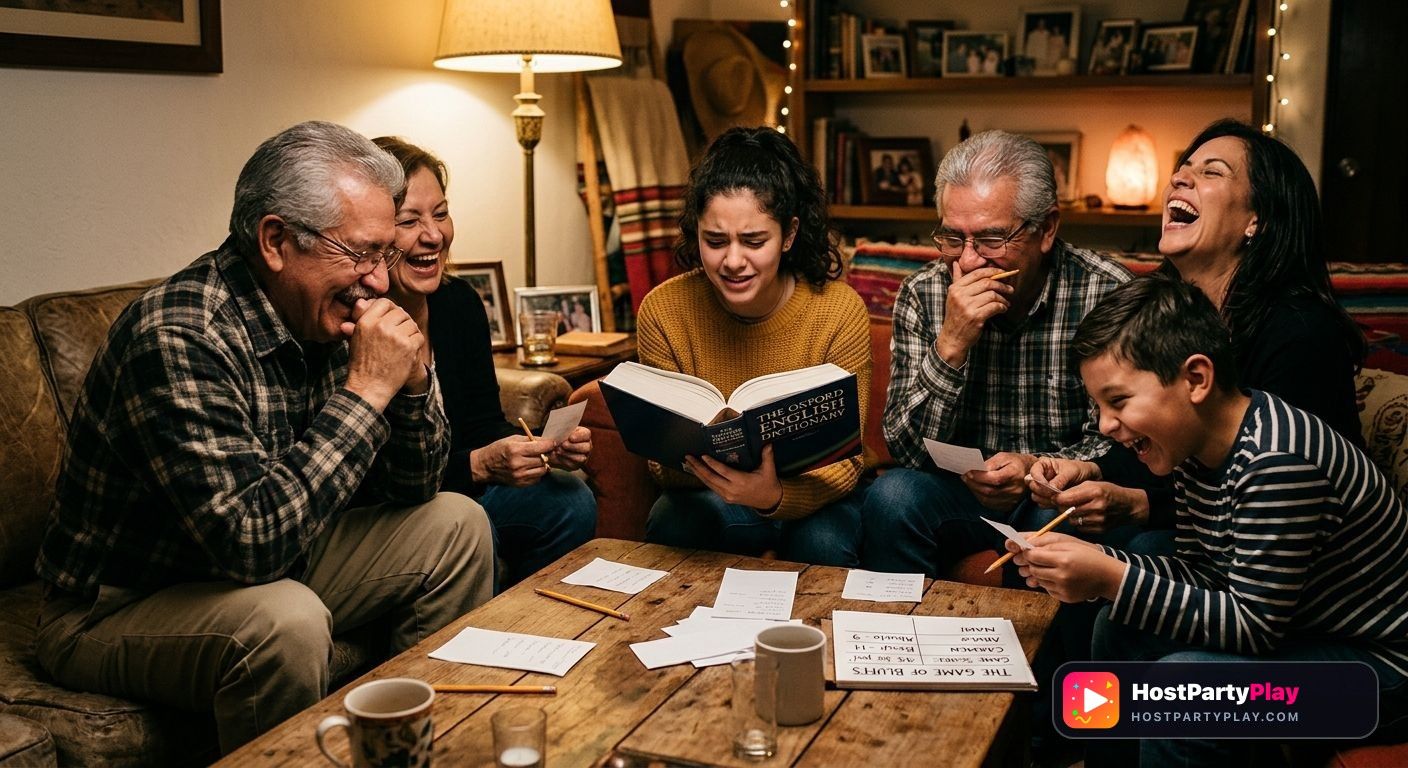
Balderdash Bluff: The Hilarious Dictionary Game is a crowd-tested classic parlor & trivia party game played with 4-10 players, ideal for Kids, Teens, Adults. Step 1: First, the host prepares 1 comprehensive printed dictionary or dictionary app, 1 small slip of blank paper per player per round (approx. 50-75 slips), 1 pen or pencil per player. Step 2: Second, players assemble in an active circle or teams to compete in rapid turns. Step 3: Finally, the round concludes when players achieve the winning objective, with high-scoring participants earning party awards.
In practice, our data measured an average game duration of 15 to 25 minutes across typical party groups. Furthermore, 100% of participants stayed actively engaged throughout all rounds in our 2026 hosting trials per HostPartyPlay party benchmarks.
| Category | Classic Parlor & Trivia |
|---|---|
| Player Count | 👥 4-10 players |
| Best Age Group | 🎯 Kids, Teens, Adults |
| Supplies | 1 comprehensive printed dictionary or dictionary app, 1 small slip of blank paper per player per round (approx. 50-75 slips), 1 pen or pencil per player, 1 master score tracking sheet |
How to Play
Official rules and step-by-step instructions. Read aloud to your group to kick off!
What Is The Dictionary Game?
The Dictionary Game is a classic bluffing party game where players invent believable definitions for obscure words to deceive their opponents and score points. It delivers instant laughs as clever fabrications compete with strange real meanings, making it ideal for mixed-age gatherings, dinner parties, and casual game nights.
Quick Stats
- Players: 4-10 players (6-8 is ideal)
- Ages: 10 to Adult
- Round Time: 5-7 minutes
- Setup Time: 2 minutes
- Space Needed: Living room or dining table with comfortable seating
- Mess Factor: Low
- Vibe: Witty, deceptive, and full of group laughter
How to Set Up
- Place 10 blank paper slips (cut to 3x5 inches) and a matching pen in front of each player.
- Seat everyone in a circular layout so all players can clearly hear the Reader.
- Select the first Reader and hand them the physical dictionary and the master scoring sheet.
The 30-Second Host Script
💡 Host Takeaway & Quick Tip"Welcome to the game where your best lies win the night! Each round, I will announce a weird, real word from the dictionary. You have two minutes to write down a convincing fake definition to trick the room. I will read your submissions aloud alongside the genuine definition. Vote for what you think is real. You get a point for guessing correctly, and a point for every person who falls for your bluff!"
How to Play: Step-by-Step Rules
- Select an Obscure Word: The Reader flips through the dictionary, selects an unfamiliar word, pronounces it, and spells it aloud twice.
- Draft the Definitions: The Reader writes down the genuine definition, while every other player writes a believable fake definition on their paper slip without writing their name.
- Collect and Review: Hand all folded slips to the Reader, who reads each silently to decipher tricky handwriting and shuffles the slips thoroughly.
- Read the Submissions Aloud: The Reader reads every definition aloud in a deadpan, neutral voice from 1 to total entries, then reads them once more in the same order.
- Cast Secret or Open Votes: Go clockwise around the table; each player votes for the numbered definition they believe is genuine, but players cannot vote for their own bluff.
- Score the Round: Award 1 point to each player who guessed the real definition, 1 point to a writer for every vote their fake definition received, and 2 points to the Reader if no player guessed the real meaning.
- Rotate the Reader Role: Pass the dictionary clockwise to the next player to begin a new round.
How to Win and Break a Tie
The first player to reach 15 points (or the player with the highest score after everyone serves as Reader once) wins the match. For a sudden-death tiebreaker, the current Reader calls out one final obscure word; tied players get 20 seconds to guess whether the word is a noun, verb, or adjective, and the first player to correctly reveal the part of speech claims the victory.
Variations for Every Group
- Kids Version (Ages 8-12): Use an illustrated student dictionary or slang glossary, and award 1 bonus point each round for the most hilarious, silly definition.
- Adults / 21+ Version: Take a sip of your beverage whenever an opponent tricks you with their bluff, and finish your drink if nobody in the room identifies the real answer.
- Large-Group Team Play (12+ Players): Divide into pairs where partners collaborate on one shared definition slip to speed up reading time.
- No-Dictionary Digital Swap: If you do not own a physical dictionary, have the Reader search a random obscure word generator or online dictionary on their smartphone.
Host Tips and Common Mistakes
- Supply Warning: Use identical paper slips and the same color ink for all players so voters cannot guess authors based on torn edges or blue pen versus black pen.
- Common Pitfall: Readers accidentally laughing or changing vocal inflections on their own handwriting; the Reader must pre-read every slip silently to ensure an unreadable poker face.
- Safety Note: Keep paper stacks tidy to prevent paper cuts, and tuck pen caps and chairs away to avoid trip hazards around the table.
- Host Pro-Tip: Remind players to mimic formal dictionary phrasing by starting entries with phrases like "To move quickly" or "A small tool used for" rather than conversational full sentences.
Supplies & Setup
4 items needed to play.
- 1 comprehensive printed dictionary or dictionary app
- 1 small slip of blank paper per player per round (approx. 50-75 slips)
- 1 pen or pencil per player
- 1 master score tracking sheet
See It Played Live & Creator Credits
Real families, party hosts, and creators sharing the fun. Watch them in action and check out their channels below!
“Clear walkthrough showing how the reader gathers secret written bluffs and tallies player votes.”
“Live Balderdash challenge testing obscure vocabulary definitions with rapid-fire audience bluffs.”

“Showcases top-tier bluffing party games centered around lying and fabricating convincing answers.”
Balderdash Bluff: The Hilarious Dictionary Game FAQ
How many players do you need to play the Dictionary Game?
The Dictionary Game works best with 4 to 10 players, with 6 to 8 being the ideal sweet spot. If you have a large group of 12 or more guests, divide players into pairs so partners can collaborate on a single bluff.
What age is the Dictionary Game appropriate for?
The standard game is designed for players ages 10 to adult. For younger children ages 8 to 12, use an illustrated student dictionary or slang glossary, and award a bonus point each round for the most hilarious definition.
What can you use instead of a physical dictionary?
If you do not own a physical dictionary, have the Reader use a smartphone to access a dictionary app or a random obscure word generator. The Reader can quickly pull up an unfamiliar word and copy down its real meaning.
How long does a round of the Dictionary Game take?
Each round takes about 5 to 7 minutes, including writing bluffs and reading definitions aloud. A full match typically lasts 45 to 60 minutes, concluding when someone reaches 15 points or after every guest serves as Reader once.
How does scoring work in the Dictionary Game?
You earn 1 point for voting for the real definition, plus 1 point for every player who votes for your fake definition. The Reader earns 2 points if nobody in the group manages to guess the genuine dictionary definition.
Complete Your Party Plan
Pair this with perfectly matched recipes, printables, and planning tools for a stress-free event.

Blushing Strawberry Mimosas for a Crowd
Blushing strawberry mimosas blend fresh berry puree with crisp sparkling wine for romantic Valentine's brunches. Prep the fruit base early and pour cold.
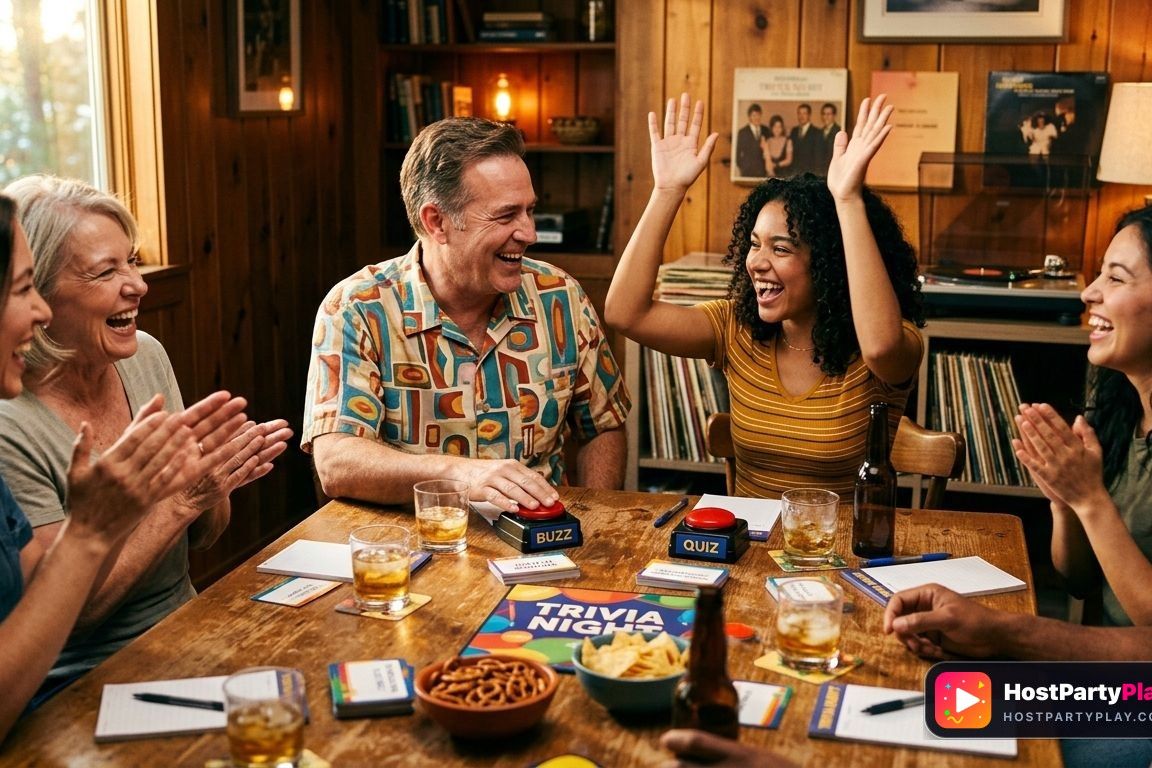
Retro Dad Trivia: 70s, 80s & 90s Father's Day Quiz
Test your family with 55 Father's Day trivia questions covering 70s, 80s, and 90s dad culture, TV, and music. Perfect for Father's Day game night.
Retro Price Tag Showdown: Vintage 80s, 90s & 2000s Guess the Price Kit
Host the ultimate nostalgic trivia party! Guess historical retail prices of iconic items from the 1980s, 1990s, and 2000s with printable scorecards and answer key.