Dal Sorting Showdown: 60-Second Rajma & Moong Race
Dal Sorting Showdown gives players 60 frantic seconds to separate rajma, chana, and green moong one-handed—a riotous South Asian kitty party hit.

Scan with your phone camera to open the rules and timer on mobile.
Dal Sorting Showdown: 60-Second Rajma & Moong Race — Quick Host Facts
At-a-glance player count, age group, category, and supply requirements.
| Category | South Asian Classics & Heritage Games |
|---|---|
| Player Count | 👥 4-20 players |
| Best Age Group | 🎯 Kids, Teens, Adults |
| Supplies | 1 cup dry red rajma (kidney beans), 1 cup dry kabuli chana (chickpeas), and 1 cup dry whole green moong, Paper plates with raised rims (1 mixed pulse plate per active player), 3 small sorting bowls or plastic cups per active player, Digital stopwatch or 60-second phone timer, Festive mithai box or gift card prize, Printed Kitty Party Tally Scorecard |
How to Play
Official rules and step-by-step instructions. Read aloud to your group to kick off!
What Is Dal Sorting Showdown: 60-Second Rajma & Moong Race?
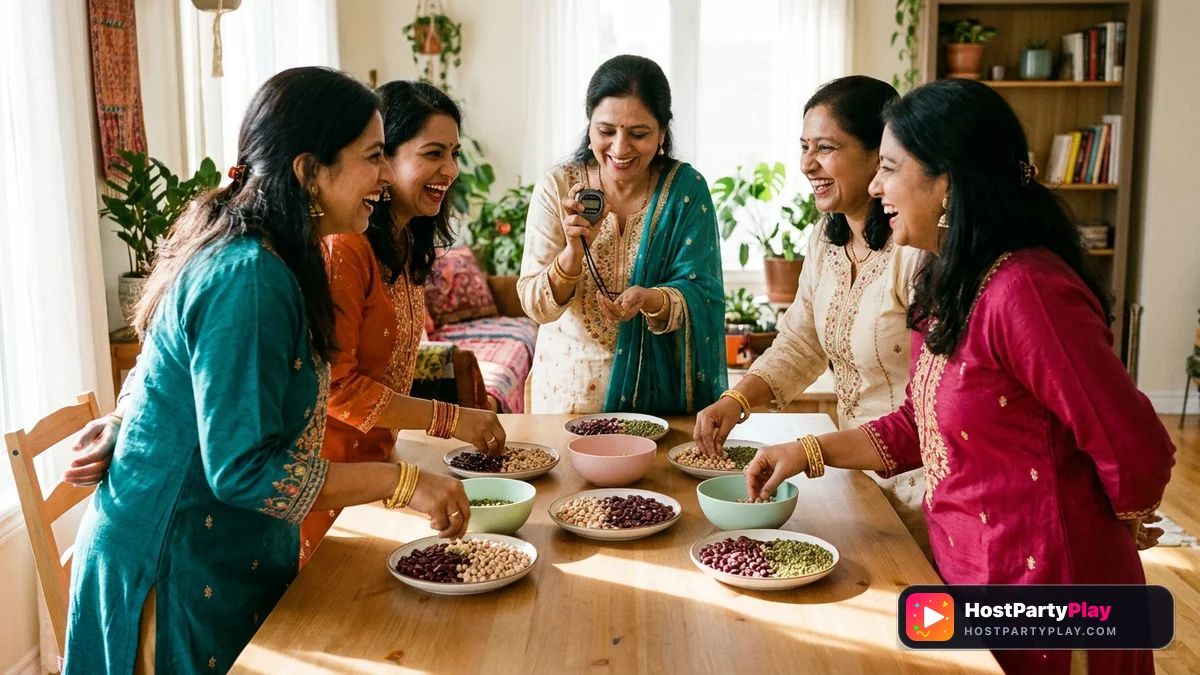
Dal Sorting Showdown: 60-Second Rajma & Moong Race is a classic Indian kitty party and festive family dexterity challenge where players race the clock using strictly one hand to separate mixed dry pantry pulses into pristine bowls. Big rajma beans lure players into moving too fast, while tiny rolling moong grains trigger hilarious contamination penalties during the final count!
Quick Stats
- Players: 4-20 players (seated together or in heats of 6)
- Ages: 6 to 80+
- Round Time: 60 seconds per heat (15 minutes total)
- Setup Time: 5 minutes
- Space Needed: 1 dining or coffee table
- Mess Factor: Low (dry pantry beans sweep up in seconds)
- Vibe: Competitive, chatty, and suspenseful at count time
How to Set Up
- Mix the Pantry Trio: Stir equal 1-cup scoops of dry red rajma (kidney beans), beige kabuli chana (chickpeas), and tiny green whole moong together in a large bowl—contrast in size and color is essential!
- Portion Equal Plates: Scoop 1/2 cup of the mixed pulses onto a rimmed paper plate in front of each player and line up 3 empty small bowls directly above each plate (one for Rajma, one for Chana, one for Moong).
- Set the Timer & Hand Rule: Ready a 60-second stopwatch and instruct every player to tuck their non-dominant hand firmly behind their back (or hold their teacup!).
The 30-Second Host Script
💡 Host Takeaway & Quick Tip"Ladies and gentlemen, time to test the fastest kitchen hands in the house! On your plate sits a mix of red rajma, white chana, and tiny green moong. Tuck one hand behind your back right now—you may only sort with one hand, and you cannot tilt or pour your paper plate! You have 60 seconds: Rajma and Chana score 1 point each, tiny green Moong scores 2 points each, and every wrong grain hiding in a bowl deducts 3 penalty points! Hands up... three, two, one, sort!"
How to Play: Step-by-Step Rules
- Lock One Hand Behind Your Back: Sit at your station with 3 empty bowls and 1 mixed plate, placing your free hand behind your chair before the clock starts; touching any bean with two hands forfeits 10 points.
- Pick and Drop for 60 Seconds: At the host's "Sort!" cue, pinch and drop dry pulses from the rimmed plate into their three separate bowls—you may pinch multiple matching grains in one hand, provided no stray variety slips in.
- Hands Up on the Buzzer: Throw your sorting hand straight into the air the instant the 60-second alarm rings; any grains still pinched in mid-air return to the plate uncounted.
- Swap Neighbor Inspection: Slide your three bowls one seat to the left so your neighbor becomes your official auditor—auditors love spotting a rogue green moong hiding under red rajma!
- Calculate Weighted Net Score: Award +1 point per clean Rajma or Chana, +2 points per tiny green Moong, and subtract -3 points for every mismatched grain found in the wrong bowl or dropped onto the floor.
How to Win and Break a Tie
The player with the highest net score after subtracting contamination penalties wins the Kitty Party Crown and mithai prize.
Sudden-Death Tiebreaker: Place 15 tiny green moong grains and 15 chickpeas on two plates for tied finalists and hand each player a single drinking straw—20 seconds of suction-straw sorting decides the champion instantly!
Variations for Every Group
- Kids Version (Ages 5-9): Use larger, easy-to-pinch items—red rajma, dry pasta penne, andshelled peanuts (if allergy-safe) or colored cereal loops—and allow two-handed sorting with zero negative penalties.
- Adults Twist (Blindfolded Touch Sort): Slip sleep masks onto players for a 45-second bonus round where they must distinguish flat kidney-shaped rajma from bumpy round chana purely by fingertip feel!
- Large-Group Version (15+ Players): Run three 60-second preliminary heats of 6 players around the dining table, advancing the top 2 scorers from each heat into a dramatic Chopstick-or-Spoon Championship Final.
- Budget Swap: Reuse all dry pulses right back into an airtight jar afterward to soak and cook Dal Makhani or mixed sprouts the next day for zero food waste!
Host Tips and Common Mistakes
- Supply Warning: Never mix similarly sized yellow split dals (like toor dal and chana dal) under warm evening living-room lights—players over 40 will squint at identical yellow discs instead of racing joyfully! Stick to stark red, beige, and green whole pulses.
- Common Pitfall: Flat foam plates flex and launch round moong beans across the carpet; use stiff rimmed paper plates or steel thalis to keep rolling grains contained.
- Safety Note: Keep dry whole beans and chickpeas strictly off low coffee tables if toddlers under age 3 are crawling nearby, as small dry legumes are a choking and nose-pebble hazard.
- Host Pro-Tip: Announce the 2x double-point value on tiny green moong clearly before starting—watching half the table gamble on tiny rolling moong while cautious players farm safe rajma creates genuine tactical drama!
Supplies & Setup
6 items needed to play.
- 1 cup dry red rajma (kidney beans), 1 cup dry kabuli chana (chickpeas), and 1 cup dry whole green moong
- Paper plates with raised rims (1 mixed pulse plate per active player)
- 3 small sorting bowls or plastic cups per active player
- Digital stopwatch or 60-second phone timer
- Festive mithai box or gift card prize
- Printed Kitty Party Tally Scorecard
Dal Sorting Showdown: 60-Second Rajma & Moong Race FAQ
Which three dry dals or beans have the clearest visual contrast for fast sorting?
Dark red rajma (kidney beans), creamy beige kabuli chana (garbanzo beans), and bright green whole sabut moong give unbeatable color and size contrast so neighbor auditors can count bowls in under 45 seconds.
Can we still cook the rajma, chana, and moong after the kitty party?
Yes! Have guests wash and dry their hands before playing, keep the dry raw legumes on clean plates, and rinse them thoroughly three times under running water before soaking for a mixed bean chaat or dal tadka.
How much dry pulse mix do I need for 12 kitty party guests?
If all 12 guests play simultaneously, mix 2 cups each of rajma, chana, and whole moong (6 cups total, yielding half a cup per plate). If you run two heats of 6 players, just 1 cup of each pulse is plenty.
Is sliding beans off the edge of the paper plate into a bowl allowed?
No! Explicitly ban lifting, tilting, or funneling the paper plate during your 30-second host briefing—every pulse must be pinched up off the flat plate with fingers so nobody dumps bulk piles.
How do we speed up counting when 15 guests play?
Have neighbors group counted beans into neat little piles of 5 on a clean napkin as they audit—counting groups of 5 takes half the time and prevents losing count mid-bowl!
Complete Your Party Plan
Pair this with perfectly matched recipes, printables, and planning tools for a stress-free event.
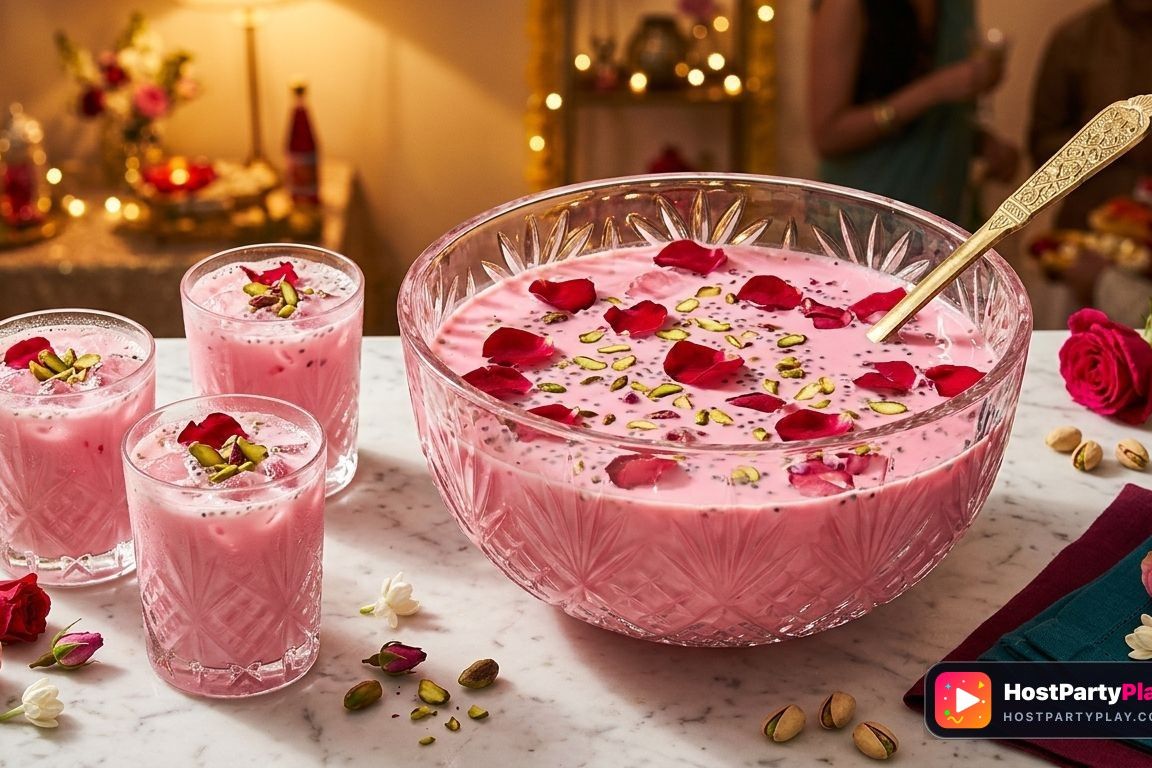
Chilled Rooh Afza Rose Milk Punch
Rooh Afza rose milk punch delivers sweet floral notes, creamy richness, and cooling basil seeds in a quick big-batch drink for festive gatherings.
Ramayana & Diwali Trivia: 50 Questions and Answers
Challenge your party with 50 Ramayana and Diwali trivia questions and answers. Features easy rounds, deep lore, and quick tiebreakers for game night.
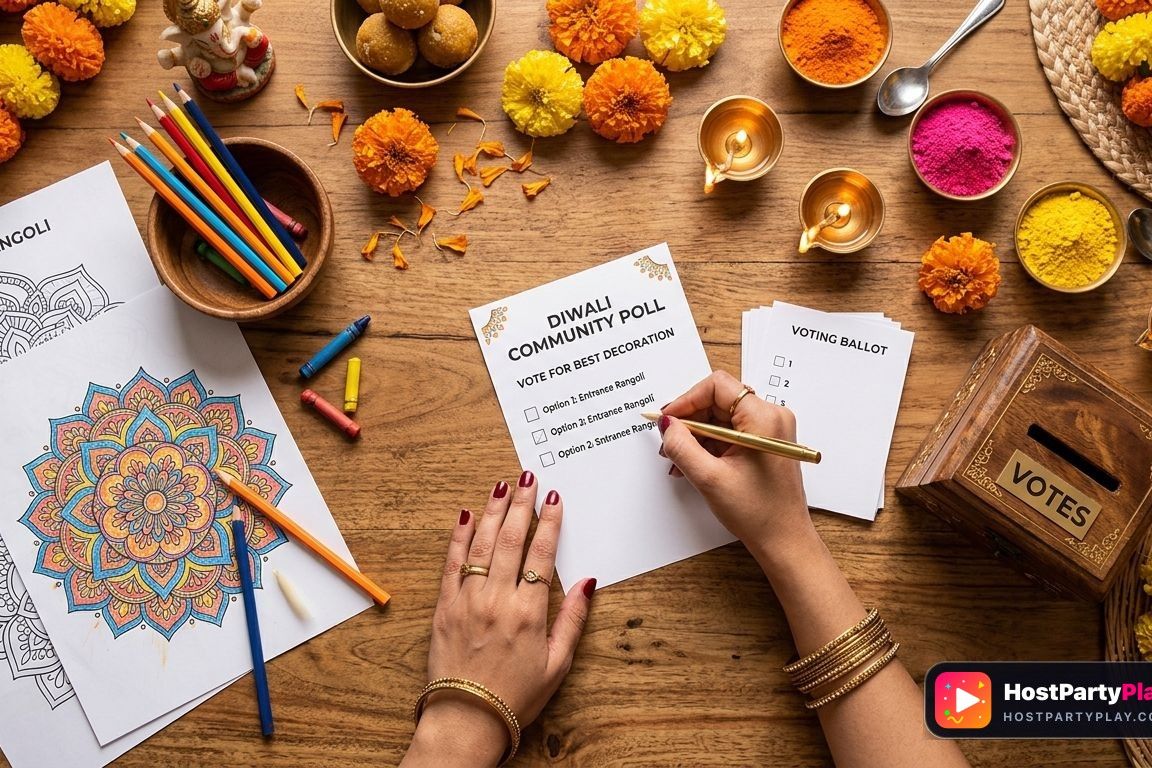
Diwali Rangoli Coloring Contest & Guest Voting Ballot Kit
Host a vibrant Diwali Rangoli coloring contest with intricate printable mandala sheets, guest voting ballots, artist display tents, and award superlatives.