Ddakji Paper Flipping Game
Ddakji Paper Flipping Game pits rivals head-to-head slamming folded paper tiles onto the floor to flip an opponent's square—ideal for teens and adults.

Scan with your phone camera to open the rules and timer on mobile.
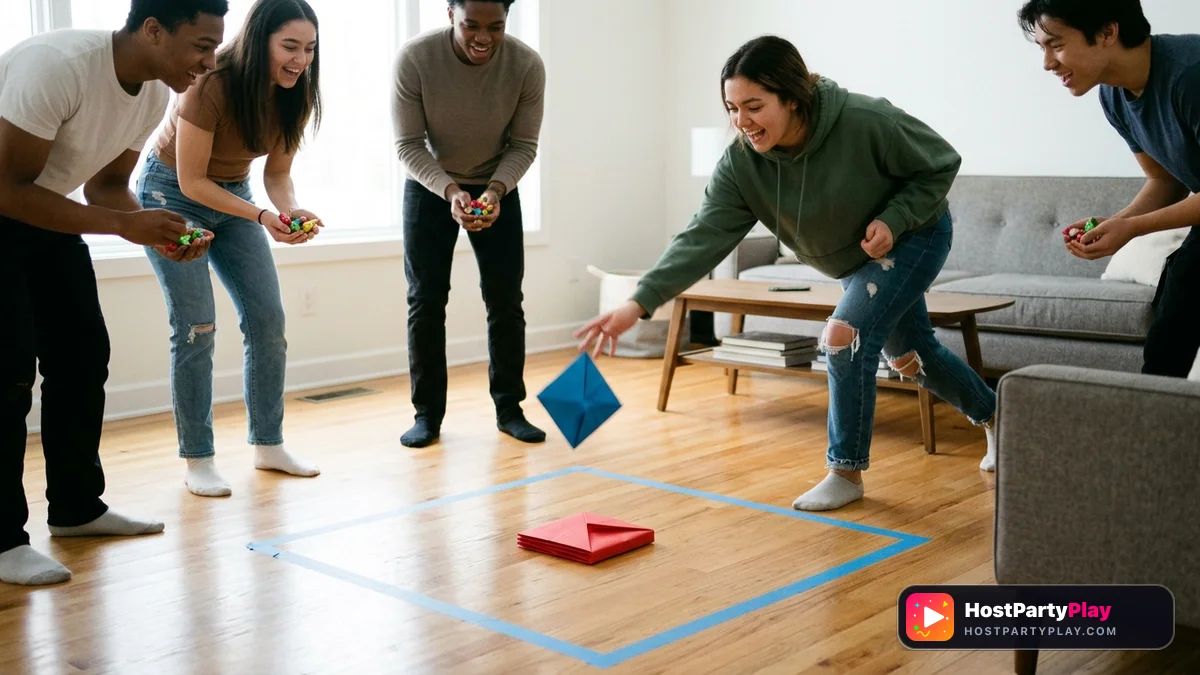
Ddakji Paper Flipping Game — Quick Host Facts
At-a-glance player count, age group, category, and supply requirements.
| Category | Active & Outdoor Games |
|---|---|
| Player Count | 👥 2-16 players |
| Best Age Group | 🎯 Teens, Adults |
| Supplies | Heavyweight colored construction paper or 65-lb cardstock in red and blue (2 sheets per tile, 16 sheets total), Painter's tape (1 roll to mark a 4x4-foot floor duel box), Wrapped candies or point chips (5 tokens per player), Ruler or bone folder (for creasing tight, flat paper edges) |
How to Play
Official rules and step-by-step instructions. Read aloud to your group to kick off!
What Is Ddakji Paper Flipping Game?
Ddakji Paper Flipping Game is a traditional Korean floor-slamming duel where two players take turns hurling a thick, folded paper square down onto an opponent's resting tile until the air gust and impact flip it upside down. Simple to fold in two minutes yet fiercely addictive to master, it delivers explosive one-on-one showdowns on any hard living room floor, patio, or office hallway.
Quick Stats
- Players: 2-16 players (head-to-head duels or bracket heats)
- Ages: Teens and Adults (13+)
- Round Time: 3-5 minutes per match (15 minutes for a full bracket)
- Setup Time: 10 minutes to fold 8 crisp tiles
- Space Needed: 6x6 feet of hard, flat flooring (wood, tile, concrete, or linoleum)
- Mess Factor: Zero mess
- Vibe: Rowdy arcade-style hype with dramatic windups and instant rematches
How to Set Up
- Fold Two-Color Ddakji Tiles: Cut 8 red and 8 blue cardstock sheets into 4x11-inch strips, fold each strip lengthwise into thirds, crease 90-degree angled ends, and weave two strips together envelope-style to build 4 red and 4 blue 4x4-inch square tiles.
- Tape the Duel Box: Use painter's tape to outline a 4x4-foot square target arena on a hard, rug-free floor, leaving at least 3 feet of clear standing room around every edge.
- Distribute Wager Tokens: Hand every guest 5 candy tokens or poker chips so winners collect 1 token per successful flip.
The 30-Second Host Script
💡 Host Takeaway & Quick Tip"Grab one red or blue folded tile and five point tokens! Two challengers step up to the taped duel box and play rock-paper-scissors—the loser places their tile flat inside the square, and the winner gets one overhead slam to flip that target tile completely onto its back. Flip it clean and you win one token from your rival; miss the flip and your tile stays on the floor for them to slam right back. First player to score three flips wins the match!"
How to Play: Step-by-Step Rules
- Set the Target Tile: Play one quick throw of rock-paper-scissors; the losing player sets their folded square flat inside the center of the 4x4-foot taped floor box with its woven X-side facing up.
- Plant Your Feet Outside the Line: Stand with both shoes just outside the painter's tape border—leaning over the box is legal, but stepping onto the target tile or kicking air with your foot is an automatic foul.
- Wind Up and Slam Downward: Whip your throwing tile sharply downward so it strikes either the raised edge of the floor tile or the floor half an inch beside it, using trapped air and rebound force to pop the target over.
- Check for a Complete Flip: Award 1 point and 1 wager token only when the resting tile lands completely upside down on its smooth reverse face; if it leans against a shoe or drops back down, zero points score.
- Swap Roles on a Miss: Leave your thrown tile wherever it came to rest inside the arena if the target fails to flip—if it bounced outside the 4x4-foot tape line, place it 1 foot from the opponent's square—and let your rival take the next slam.
- Rotate Through the Bracket: Crown the first player to reach 3 flips as match winner and immediately call the next pair of challengers into the ring.
How to Win and Break a Tie
In single matches, the first challenger to score 3 clean flips (or capture all 5 of an opponent's tokens in high-stakes free-play) wins. If tournament time expires with two finalists tied at 2-2, run a 20-second sudden-death speed round: place two target tiles side-by-side in the box and hand each finalist two throwing tiles—whoever flips their assigned target over first in simultaneous slams takes the championship.
Variations for Every Group
- Kids Version: Fold slightly larger 5x5-inch tiles from lightweight construction paper with a slight dome curve on the bottom, making tiles much easier for lighter arms to pop over without straining shoulders.
- Adults Version: Run "King of the Square" survival queues where challengers line up with drink-sip or dare tokens, and the reigning champion stays in the box until someone unseats them in a single one-shot flip.
- Large-Group (15+) Version: Tape three 4x4-foot duel boxes in a row—Bronze, Silver, and Gold courts—so 6 players slam at once; winners move up one court and losers drop down after every 90-second buzzer.
- Budget / No-Supplies Swap: Tear empty cereal boxes into 4-inch cardboard squares or fold junk-mail flyers into thick four-layer packets taped shut along the seams.
Host Tips and Common Mistakes
- Supply Warning: Never set the duel ring on plush carpet or thick area rugs—soft pile absorbs all impact energy and makes flipping even the best-folded tile nearly impossible.
- Common Pitfall: Packing extra cardboard inserts inside one player's throwing tile creates an unfair weight advantage; weigh or inspect all house tiles beforehand so every square uses identical two-sheet cardstock.
- Safety Note: Keep spectators standing at least 4 feet back from the taped square because missed edge-strikes occasionally send stiff cardstock tiles skittering sideways at ankle height.
- Host Pro-Tip: Gently step on freshly folded tiles with clean socks before the match to flatten puffy air pockets—a slightly broken-in throwing tile slaps harder and lasts twice as many rounds.
Supplies & Setup
4 items needed to play.
- Heavyweight colored construction paper or 65-lb cardstock in red and blue (2 sheets per tile, 16 sheets total)
- Painter's tape (1 roll to mark a 4x4-foot floor duel box)
- Wrapped candies or point chips (5 tokens per player)
- Ruler or bone folder (for creasing tight, flat paper edges)
Ddakji Paper Flipping Game FAQ
What kind of paper works best for folding sturdy ddakji tiles?
Medium-weight 65-pound cardstock, heavy 9x12 construction paper, or glossy magazine covers work best because they add enough mass to slap the floor hard without tearing. Standard 20-pound printer paper is too light on its own unless you double up two sheets per strip.
What is the secret technique to actually flip the floor tile?
Aim to strike the raised outer seam of the target tile at a slight angle or slam flat onto the floor a quarter-inch beside its thickest edge rather than dead center. Hitting dead center pins the target tile down, whereas clipping the edge drives a burst of air underneath that pops it over.
Can we play ddakji outdoors on grass or a wooden deck?
Smooth concrete patios, driveways, and garages work great, while grass and uneven deck boards absorb the shockwave or trap tile corners in gaps. If your party is on a lawn, lay down a flat 3x3-foot scrap of plywood or Masonite board as a portable slam pad.
How many spare paper tiles should I fold for a 12-person party?
Fold at least 8 to 10 tiles for 12 guests so two courts can run simultaneously with 4 fresh backup squares ready on the sidelines. After 15 to 20 hard slams, the corners of paper tiles soften up and curl, making fresh replacements handy for the finals.
Does the target player start with the X-side up or smooth-side up?
Always start the target tile with the woven four-flap X-side facing up and the smooth flat back resting against the floor. That slight lip around the bottom perimeter lets air rush underneath cleanly and gives both players equal odds.
Complete Your Party Plan
Pair this with perfectly matched recipes, printables, and planning tools for a stress-free event.

Blushing Strawberry Mimosas for a Crowd
Blushing strawberry mimosas blend fresh berry puree with crisp sparkling wine for romantic Valentine's brunches. Prep the fruit base early and pour cold.
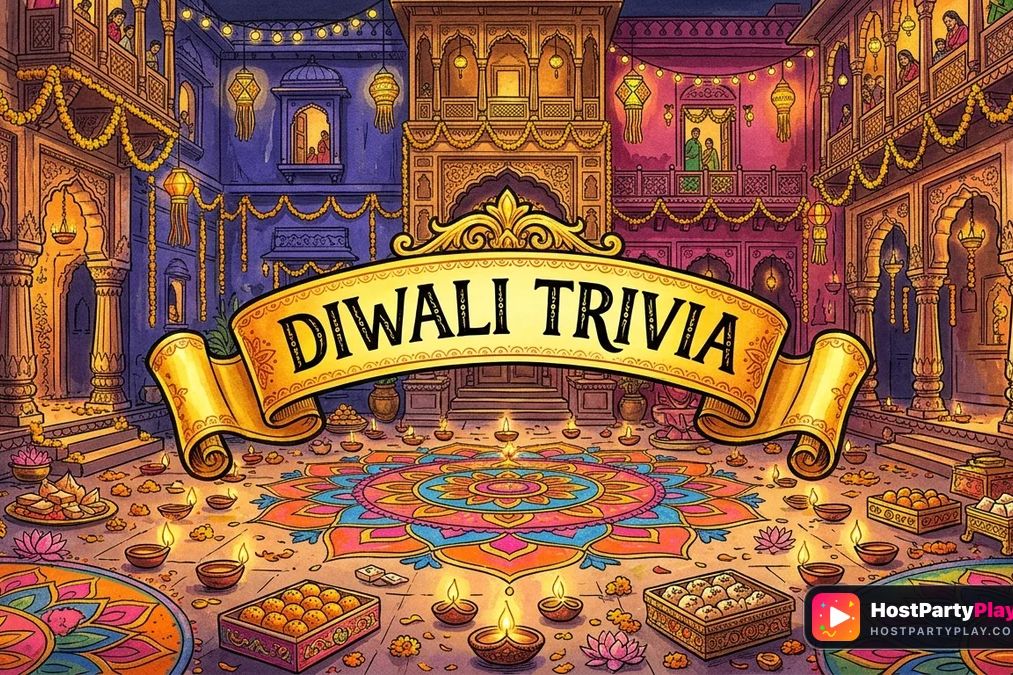
Ramayana & Diwali Trivia: 50 Questions and Answers
Challenge your party with 50 Ramayana and Diwali trivia questions and answers. Features easy rounds, deep lore, and quick tiebreakers for game night.
Retro Price Tag Showdown: Vintage 80s, 90s & 2000s Guess the Price Kit
Host the ultimate nostalgic trivia party! Guess historical retail prices of iconic items from the 1980s, 1990s, and 2000s with printable scorecards and answer key.