Seven-Card Stud: The Classic Home Poker Game
Seven-Card Stud tests memory and nerve without community cards. Build the best five-card poker hand across five betting rounds to take the pot.

Scan with your phone camera to open the rules and timer on mobile.

Seven-Card Stud: The Classic Home Poker Game — Quick Host Facts
At-a-glance player count, age group, category, and supply requirements.
| Category | Classic Parlor & Trivia |
|---|---|
| Player Count | 👥 2-8 players |
| Best Age Group | 🎯 Teens, Adults |
| Supplies | 1 standard 52-card deck (no jokers), Poker chips or tokens (approx. 40-50 per player), 1 dealer button or token |
How to Play
Official rules and step-by-step instructions. Read aloud to your group to kick off!
What Is Seven-Card Stud?
Seven-Card Stud is a classic poker game where each player receives seven individual cards—three face down and four face up—to build the best five-card hand without community cards. It rewards memory, sharp observation, and calculated betting, making it an engaging centerpiece for home game nights.
Quick Stats
- Players: 2-8 players (best with 4-7)
- Ages: Teens (13+) to Adults
- Round Time: 5-8 minutes per hand
- Setup Time: 2 minutes
- Space Needed: Dining table or standard card table
- Mess Factor: Low
- Vibe: Strategic, suspenseful, and conversational
How to Set Up
- Clear a standard dining or card table and give each player about 2 feet of elbow room to keep hands private.
- Distribute 50 poker chips to every player in three standard denominations (such as thirty $1 chips, fifteen $5 chips, and five $10 chips).
- Establish fixed betting stakes: set a small bet (e.g., $2), a big bet (e.g., $4), and an ante of roughly 10% to 25% of the small bet (e.g., $0.50).
- Unbox a fresh 52-card deck, remove both jokers, and select a starting dealer or designate a dedicated host dealer.
The 30-Second Host Script
💡 Host Takeaway & Quick Tip"Welcome to Seven-Card Stud! Everyone drops an ante into the center pot before every hand. You will each receive two hidden hole cards and one card face up. The player showing the lowest door card pays the bring-in fee to launch the action. We will deal three more cards face up and one final card face down, with betting after each round. Remember what cards your rivals hold, protect your chips, and make the strongest five-card poker hand to sweep the pot!"
How to Play: Step-by-Step Rules
- Pay the Ante: Every player places the mandatory ante token into the center pot before the dealer pitches any cards.
- Deal Third Street: Pitch two face-down cards and one face-up card clockwise to each player, starting on the dealer's immediate left.
- Post the Bring-In: Identify the player showing the lowest-ranked face-up card; that player must bet the mandatory bring-in amount or complete to a full small bet (suits break rank ties alphabetically: clubs, diamonds, hearts, spades).
- Complete the Opening Betting Round: Proceed clockwise from the bring-in; players may call the current wager, raise by the small-bet amount, or fold their cards face down.
- Deal Fourth Through Sixth Streets: Deal one exposed card face up per active player on Fourth, Fifth, and Sixth Streets; conduct a betting round after each street led by the strongest visible board hand (Fourth Street uses the small bet, while Fifth and Sixth Streets advance to the big bet).
- Deal Seventh Street: Deal the seventh and final card face down to each remaining player, followed by the final betting round at the big-bet limit.
- Reach the Showdown: The player who made the last aggressive bet or raise turns over their cards first; all callers reveal their hands clockwise to determine who holds the best five-card combination.
How to Win and Break a Tie
A player wins the pot either when every other player folds during any betting round or by revealing the highest standard five-card poker hand at the showdown. If two players hold identical five-card values (such as an identical pair of aces with the same kickers), split the pot evenly; award any odd remaining chip to the tied player sitting closest to the dealer's left.
Variations for Every Group
- Candy Stud (Kids & Family): Replace poker chips with wrapped candies, mini pretzel packs, or poker points; eliminate money talk and let kids focus on pattern-matching pairs, straights, and flushes.
- Razz (Lowball Stud): Flip the objective so the lowest five-card hand wins the pot (straights and flushes do not count against you, making ace through five the unbeatable nuts).
- Large Table Community River (8 Players): If all eight players remain active by Seventh Street, the deck runs short; deal a single community card face up in the center of the table that everyone shares instead of dealing individual downcards.
- Budget Pretzel Stakes: Swap expensive casino sets for standard buttons, dried beans, or board game coins to keep the play casual and low-stress.
Host Tips and Common Mistakes
- Supply Warning: An eight-player game can exhaust a 52-card deck if nobody folds (8 players times 7 cards equals 56 cards). Watch active player numbers closely on Sixth Street and implement the single community river card if needed.
- Common Pitfall: Players fold and toss their exposed upcards on top of the discard pile, hiding critical data. Require folded cards to be discarded face down so observant players can track live cards from memory.
- Safety Note: Keep small poker chips and tokens stored in containers away from children under 3 years old to eliminate choking hazards.
- Host Pro-Tip: Print a two-sided card ranking cheat sheet and place it in the center of the table so beginner players can evaluate straights, flushes, and full houses without giving away their strategy.
Supplies & Setup
3 items needed to play.
- 1 standard 52-card deck (no jokers)
- Poker chips or tokens (approx. 40-50 per player)
- 1 dealer button or token
See It Played Live & Creator Credits
Real families, party hosts, and creators sharing the fun. Watch them in action and check out their channels below!
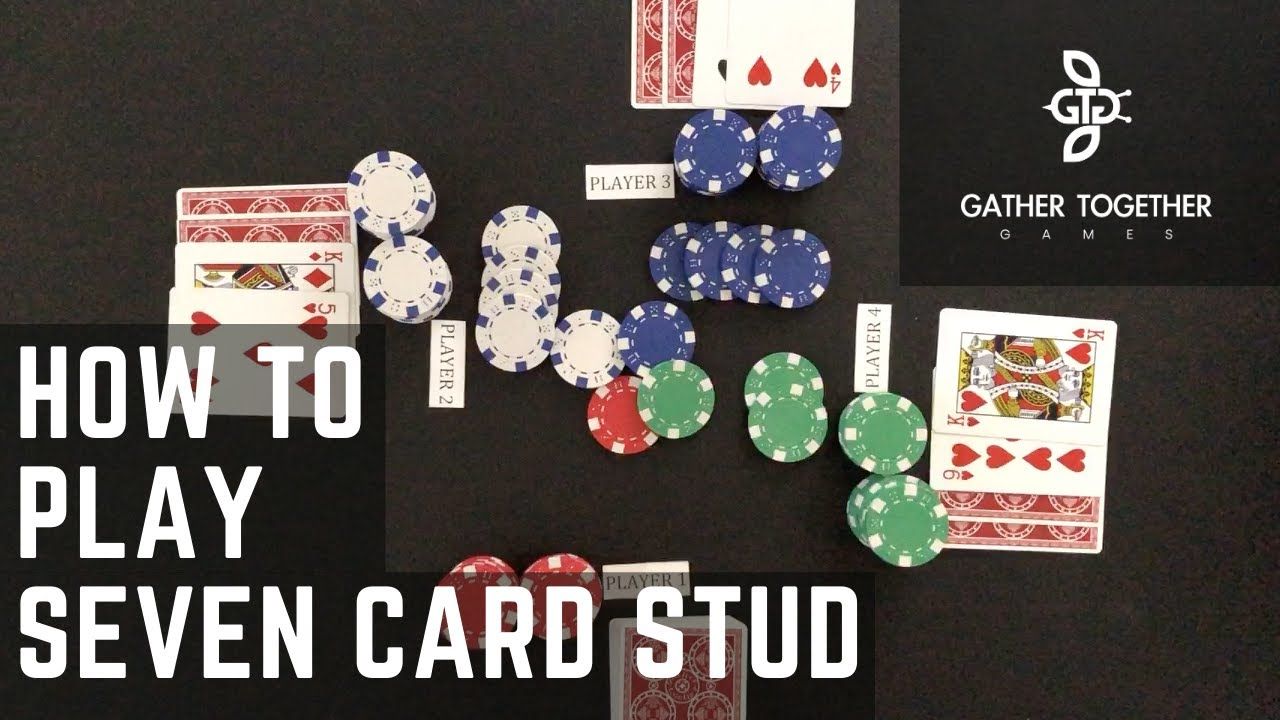
“Step-by-step masterclass covering dealing streets, bring-in bets, and classic Seven-Card Stud showdown rules.”
Seven-Card Stud: The Classic Home Poker Game FAQ
How many players can play Seven-Card Stud?
Seven-Card Stud accommodates 2 to 8 players, but it runs best with a group of 4 to 7. If all 8 players stay active through the final round, deal a single community card face up in the center for everyone to share so the 52-card deck does not run out.
What age is Seven-Card Stud appropriate for?
Seven-Card Stud is best suited for teens ages 13 and up through adults because it requires tracking exposed cards and managing betting stakes. To include younger kids, run the Candy Stud variation with wrapped candies instead of poker chips to focus on simple hand matching.
How long does a hand of Seven-Card Stud take?
A single hand of Seven-Card Stud takes about 5 to 8 minutes to play across its five betting rounds. Initial table setup takes roughly 2 minutes to divide chips and set the ante and bet limits.
What can I use instead of poker chips for Seven-Card Stud?
You can substitute standard poker chips with dried beans, buttons, board game coins, or wrapped candies. Provide each player with approximately 40 to 50 items divided across three values to cover the ante, small bets, and big bets.
How do you break a tie in Seven-Card Stud?
If two or more players reveal identical five-card poker hands at the showdown, split the pot evenly among them. If an odd chip remains that cannot be split, award it to the tied player seated closest to the dealer's left.
Complete Your Party Plan
Pair this with perfectly matched recipes, printables, and planning tools for a stress-free event.

Blushing Strawberry Mimosas for a Crowd
Blushing strawberry mimosas blend fresh berry puree with crisp sparkling wine for romantic Valentine's brunches. Prep the fruit base early and pour cold.

Retro Dad Trivia: 70s, 80s & 90s Father's Day Quiz
Test your family with 55 Father's Day trivia questions covering 70s, 80s, and 90s dad culture, TV, and music. Perfect for Father's Day game night.

Retro Price Tag Showdown: Vintage 80s, 90s & 2000s Guess the Price Kit
Host the ultimate nostalgic trivia party! Guess historical retail prices of iconic items from the 1980s, 1990s, and 2000s with printable scorecards and answer key.