Sonic Speed Run Obstacle Relay Race
Sonic Speed Run Obstacle Relay Race challenges teams to hurdle cardboard bumpers, zigzag cones, and bank time-shaving gold rings for an S-Rank record.

Scan with your phone camera to open the rules and timer on mobile.
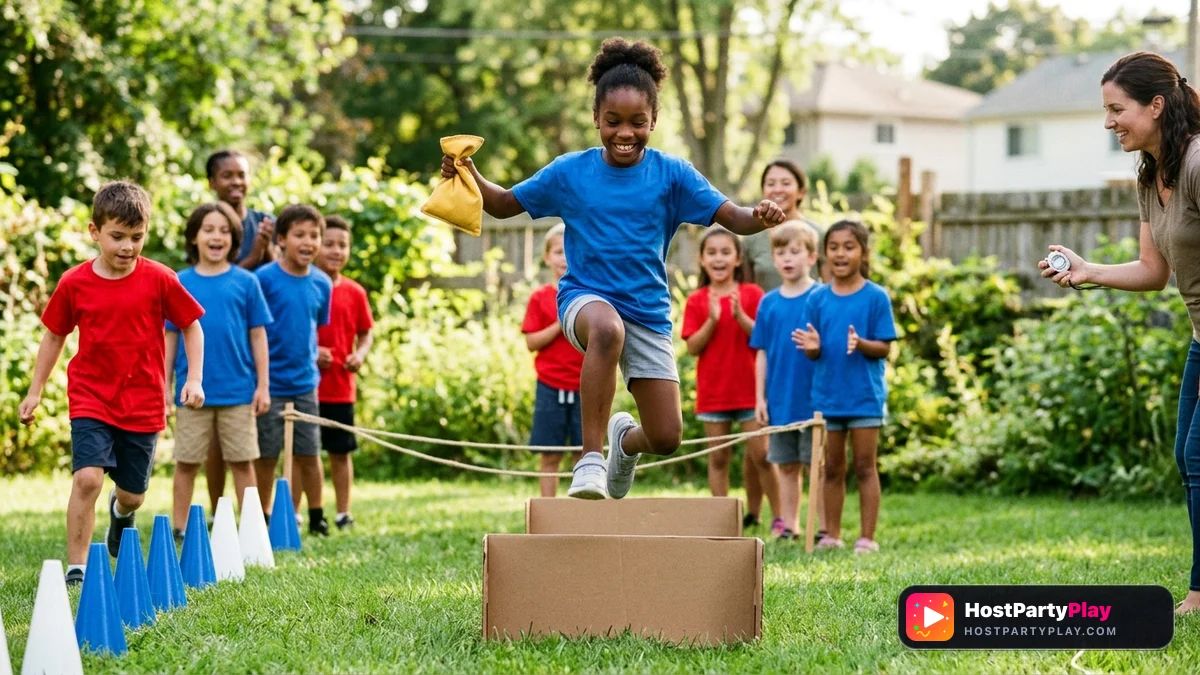
Sonic Speed Run Obstacle Relay Race — Quick Host Facts
At-a-glance player count, age group, category, and supply requirements.
| Category | Active & Outdoor Games |
|---|---|
| Player Count | 👥 4-16 players |
| Best Age Group | 🎯 Kids, Teens |
| Supplies | Medium cardboard boxes taped into jump hurdles and spin tunnels (6 boxes), Gold plastic rings or yellow paper hoops (20 rings), Mesh drawstring bags worn as ring pouches (2 bags), Blue balloons or cones for zigzag slalom markers (6 markers), Smartphone stopwatch and ruled notepad for lap splits (1 set) |
How to Play
Official rules and step-by-step instructions. Read aloud to your group to kick off!
What Is Sonic Speed Run Obstacle Relay Race?
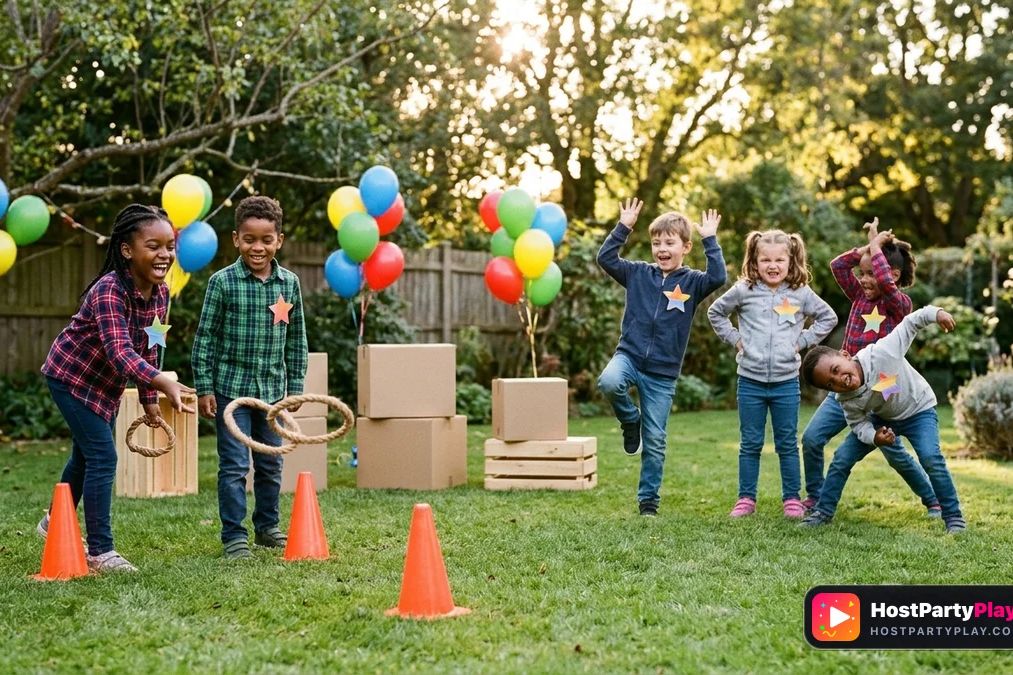
Sonic Speed Run Obstacle Relay Race is a timed backyard or gym time-trial relay where runners weave through zigzag cones, leap over cardboard bumper hurdles, and grab gold rings that shave two seconds off their team's final clock. Inspired by classic video-game speedrunning, teams race twice so everyone gets the thrill of beating their own personal-best split.
Quick Stats
- Players: 4–16 players (2 to 4 relay squads, or solo time trials)
- Ages: Kids and Teens (ages 5–15)
- Round Time: 20–25 minutes for Practice Run + Official S-Rank Run
- Setup Time: 15 minutes
- Space Needed: 15x35 feet of flat grass lawn, driveway, or school gym floor
- Mess Factor: None
- Vibe: High-adrenaline stopwatch countdowns, cheering sidelines, beat-your-record hype
How to Set Up
- Space Four Stage Obstacles: Mark a 30-foot straightaway: set 4 zigzag cones spaced 3 feet apart first, 2 low 10-inch cardboard box hurdles at the 18-foot mark, and 1 open-ended cardboard Spin-Dash crawl box at 26 feet.
- Load the Turnaround Ring Post: Stack 10 gold rings per team inside a bucket at the 30-foot turnaround flag so each runner grabs exactly 1 ring per lap.
- Mark the Checkpoint Tag Box: Tape a 4x4-foot blue square at the start line where the incoming runner must hand off the team's mesh ring pouch to the next runner.
- Ready the Stopwatch Board: Appoint 1 adult timekeeper with a smartphone stopwatch and the printable S-Rank Leaderboard sheet.
The 30-Second Host Script
💡 Host Takeaway & Quick TipRunners, step up to Green Hill Act One! When the stopwatch starts, sprint through the four zigzag cones, leap both bumper boxes, crawl or roll through the Spin-Dash tunnel, grab one Gold Ring at the turnaround flag, and sprint straight back to pass the ring pouch inside the blue Checkpoint Square. Hitting a hurdle drops one ring, and every Gold Ring left in your pouch at the finish shaves two full seconds off your clock!
How to Play: Step-by-Step Rules
- Line Up in Relay Order: Divide runners into equal squads of 2 to 4 players (if uneven, the fastest volunteer runs anchor twice) and hand each lead runner an empty mesh ring pouch.
- Start the Stopwatch Sprint: Call 3-2-1-BOOST to start the clock as Lead Runner 1 weaves through the 4 zigzag cones, hops both cardboard hurdles, and crawls through the Spin-Dash box.
- Grab Your Turnaround Ring: Snatch 1 Gold Ring from the 30-foot bucket, drop it into the mesh pouch, and sprint back along the clear outer return lane to pass the pouch inside the Checkpoint Square.
- Enforce Bumper Hit Penalties: If a runner knocks completely over a cardboard hurdle or skips a cone, they must either reset the obstacle on the spot or forfeit their lap's Gold Ring bonus at the finish.
- Calculate Net Speedrun Time: Stop the clock the instant the anchor runner crosses the Checkpoint Square, subtract 2 seconds for every Gold Ring banked in the pouch, and run a second heat so every squad tries to beat their Act One record.
How to Win and Break a Tie
Compare each squad's lowest Net Speedrun Time across both heats to crown the S-Rank Speed Champions. If two squads finish within the exact same whole second, run a 15-second Solo Anchor Dash—one sprint out to the 30-foot flag and back with zero rings—to settle the podium.
Variations for Every Group
- Kids Version: Lower hurdles to flat folded cardboard mats for ages 4 to 6 so little legs jump across lava gaps safely without tripping, and let everyone celebrate beating the group target clock together.
- Adults Version: Add a Dizzy Spin-Dash rule at the start line where adult runners must spin three full circles around a broomstick handle before weaving through the zigzag cones.
- Large-Group 15+ Version: Build two parallel obstacle lanes 8 feet apart and run four squads in a tournament bracket—Semifinal A, Semifinal B, Consolation Dash, and Grand Final.
- Budget / No-Supplies Swap: Use rolled bath towels as jump hurdles, plastic kitchen bowls upside-down as slalom cones, and yellow sticky notes slapped onto a wall at the turnaround mark.
Host Tips and Common Mistakes
- Supply Warning: Weigh down lightweight cones or balloon markers with a cup of water or beanbag inside so a light backyard breeze never blows your course out of alignment mid-lap.
- Common Pitfall: Always keep the return sprint lane completely clear of obstacles—having runners weave backward through the same cones as incoming traffic causes collisions during multi-lane races.
- Safety Note: Run obstacle courses on dry grass or rubberized gym floors in closed-toe sneakers only; avoid wet morning dew, flip-flops, or slick hardwood floors with socks.
- Host Pro-Tip: Announce Rank Tiers aloud—like under 65 seconds earns S-Rank—so even a second-place squad goes wild when they shave eight seconds off their Heat One time to hit S-Rank.
Supplies & Setup
5 items needed to play.
- Medium cardboard boxes taped into jump hurdles and spin tunnels (6 boxes)
- Gold plastic rings or yellow paper hoops (20 rings)
- Mesh drawstring bags worn as ring pouches (2 bags)
- Blue balloons or cones for zigzag slalom markers (6 markers)
- Smartphone stopwatch and ruled notepad for lap splits (1 set)
Sonic Speed Run Obstacle Relay Race FAQ
How much yard space do I need for a Sonic Speed Run obstacle relay?
A 15-by-35-foot strip of flat grass or driveway fits a brisk four-obstacle straightaway plus a safe side return lane. If you only have a 15-foot basement or living room, halve the spacing and have each runner complete two out-and-back mini laps.
How do you balance relay teams when kids span ages 5 to 12?
Draft snake-style from oldest to youngest so every squad has the same age mix, or let runners under age 7 run around the Spin-Dash crawl box while older kids must crawl all the way through it.
What happens if one team has an odd number of runners?
Count laps rather than bodies—if Squad A has 4 runners and Squad B has 3 runners, Squad B simply designates one player to run both Lap 1 and Lap 4 so both teams complete four identical laps.
What safe DIY hurdles will not trip kids if their foot clips the top?
Empty medium cardboard shipping boxes taped shut on the flaps or pool noodles balanced lightly across two upside-down paper cups tip harmlessly the instant a sneaker grazes them, preventing stumbles.
Why should teams run two heats instead of a single elimination race?
Running a Practice Act One followed by an Official Act Two lets kids learn the course rhythm and focus on beating their own squad's first time, which keeps even slower teams cheering for an S-Rank personal best.
Complete Your Party Plan
Pair this with perfectly matched recipes, printables, and planning tools for a stress-free event.

Blushing Strawberry Mimosas for a Crowd
Blushing strawberry mimosas blend fresh berry puree with crisp sparkling wine for romantic Valentine's brunches. Prep the fruit base early and pour cold.
Ramayana & Diwali Trivia: 50 Questions and Answers
Challenge your party with 50 Ramayana and Diwali trivia questions and answers. Features easy rounds, deep lore, and quick tiebreakers for game night.
Retro Price Tag Showdown: Vintage 80s, 90s & 2000s Guess the Price Kit
Host the ultimate nostalgic trivia party! Guess historical retail prices of iconic items from the 1980s, 1990s, and 2000s with printable scorecards and answer key.